The following is an op-ed from Business today.
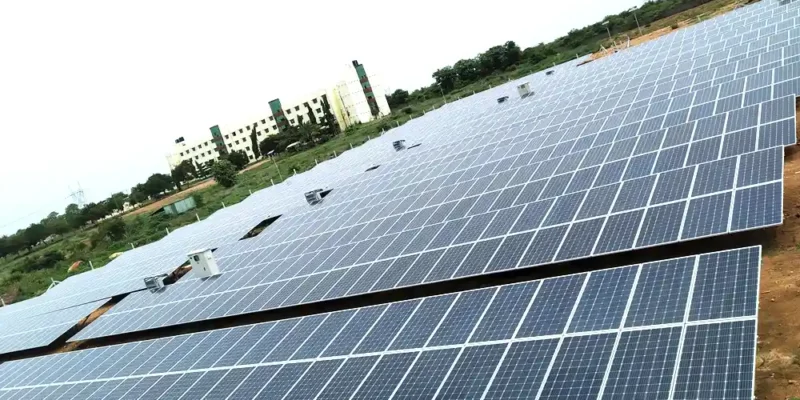
In mid-December 2025, just weeks before Malaysia’s groundbreaking carbon tax came into force, TotalEnergies and Google finalised a 21-year agreement to supply 1 TWh of renewable power from the Citra Energies solar farm in Kedah. Construction is scheduled to begin in early 2026, with the facility powering Google’s US$2 billion data centre in Selangor’s Elmina Business Park.
The timing reveals more than corporate sustainability messaging — it’s a calculated bet on Malaysia’s emergence as the region’s solar leader, made at the precise moment when the economic calculus of energy transitions fundamentally shifts.
As 2026 begins, that shift has arrived. Malaysia’s carbon tax targeting steel, cement and energy sectors is now in effect, and the country’s new “Solar ATAP” programme launched on Jan 1, 2026. For businesses from retail chains to data centres, the message is unambiguous: Energy strategy is no longer optional boardroom discussion, but a cost, competitiveness and compliance issue.
The US$2 Billion Question: Why Malaysia, Why Now?
When Google broke ground on its Malaysian data centre in October 2025, the tech giant wasn’t just expanding cloud capacity. The investment is expected to generate US$3.2 billion in economic impact and create 26,500 jobs by 2030, but more crucially, it positions Google ahead of Southeast Asia’s carbon pricing wave.
Malaysia’s appeal extends beyond cost efficiency. The nation successfully leveraged its 2025 ASEAN Chairmanship to guide the bloc through over 320 meetings, achieving more than 80 key outcomes while championing “Inclusivity and Sustainability”. October’s launch of the ASEAN Plan of Action for Energy Cooperation 2026-2030 established Malaysia not just as a diplomatic convener, but as the region’s clean energy standard-bearer.
The government’s policy arsenal gives businesses concrete reasons to move fast. Large Scale Solar 6 (LSS6) will introduce 2 GW of additional solar capacity, generating approximately RM6 billion in private investment opportunities. The Green Technology Financing Scheme offers RM1 billion in government-backed guarantees until December 2026, while the Corporate Renewable Energy Supply Scheme, launched in September 2024, enables unprecedented third-party grid access for renewable trading.
Read more here.