UN High Commissioner for Human Rights Volker Türk echoed this message in Geneva earlier this year and posed a question before the Human Rights Council:
“Are we taking the steps needed to protect people from climate chaos, safeguard their futures and manage natural resources in ways that respect human rights and the environment?”
His answer was very simple: we are not doing nearly enough.
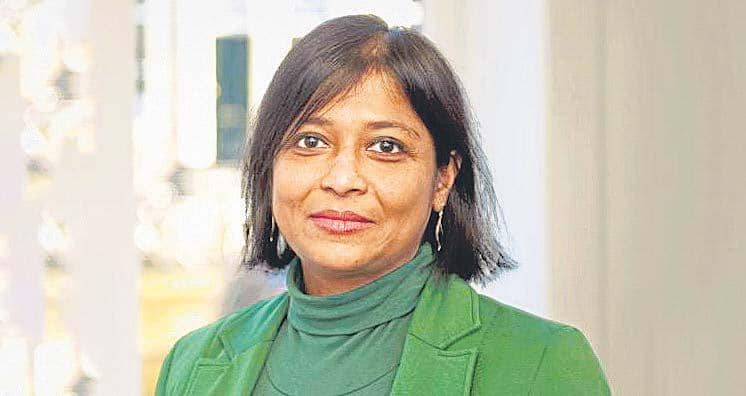
In this regard, the impacts of climate change must be understood not only as a climate emergency, but also as a violation of human rights, Professor Joyeeta Gupta told UN News recently
She is the co-chair of the international scientific advisory body Earth Commission and one of the United Nations’ high-level representatives for science, technology, and innovation for the Sustainable Development Goals (SDGs).
Professor Gupta said that the 1992 climate convention never quantified human harm.
She noted that when the Paris Agreement was adopted in 2015, the global consensus settled on limiting warming to 2° Celsius, later acknowledging 1.5° Celsius as a safer goal.
But for small island States, even that was a compromise forced by power imbalance, and “for them, two degrees was not survivable,” said Professor Gupta.
“Rising seas, saltwater intrusion, and extreme storms threaten to erase entire nations. When wealthy countries demanded scientific proof, the Intergovernmental Panel on Climate Change (IPCC) was tasked with studying the difference between 1.5° Celsius and 2° Celsius,” she continued.
She said that the results were clear that 1.5° Celsius is significantly less destructive but still dangerous.
Read further here.