The following is extract from an opinion piece written by Professor Professor Dato Dr Ahmad Ibrahiman adjunct professor at the Ungku Aziz Centre for Development Studies, Universiti Malaya posted in The New Straits Times
Look around you. The screen you’re reading on, the medicines that keep us healthy, the fertilisers that feed billions, the lightweight components in electric vehicles—all are gifts of the chemical industry.
For over a century, it has been the silent, often invisible, engine of progress. Yet, today, this same industry stands accused of poisoning our planet, drowning us in plastic, and fuelling the climate crisis. It is at a profound crossroads, facing an existential choice: reinvent or face irrelevance.
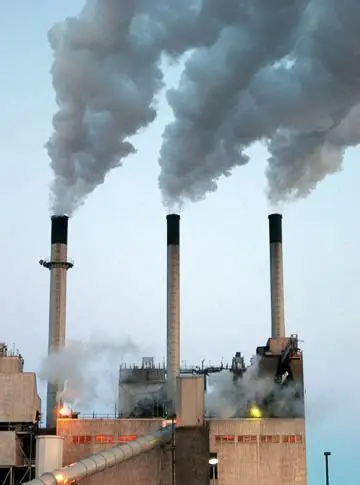
The core dilemma is a brutal paradox. The industry’s genius—transforming inert matter into wonder materials—is now its greatest liability. Its lifeblood has been cheap fossil fuels, both as feedstock and power. This made the modern world, but at a cost we can no longer afford. The “smokestack” image, long a symbol of industrial might, is now a branding nightmare in an ESG-driven world. The public sees plastic-choked oceans and “forever chemicals”; investors see carbon liabilities and regulatory risk. The industry must change.
The challenges are not mere headwinds; they are a hurricane. First, the decarbonisation imperative. The chemistry sector is a top-three industrial carbon emitter. Truly greening it means more than incremental efficiency gains; it requires a fundamental reimagining of core processes, swapping fossil feedstocks for green hydrogen, captured CO₂, and biomass. This isn’t an R&D project—it’s a capital project requiring trillions, with uncertain returns.
Second, the circular economy, though imperative, is a direct threat to the linear sales model. For decades, success meant selling more virgin plastic. Not anymore. Tomorrow’s success will hinge on creating closed loops: designing polymers for recyclability, pioneering chemical recycling to break plastics back to their original molecules, and building entirely new supply chains from post-consumer waste. It’s a shift from selling a product to managing a molecule’s entire lifecycle. Chemical engineering must adapt to the new reality.
Read the rest of the column here.