“For decades, we’ve operated under the industrial era’s guiding principle: take, make, dispose,” writes Professor Ahmad Ibrahim in the New Straits Time.
“This linear economy has delivered immense wealth, but at a catastrophic cost, leaving us buried in waste and choking on our own emissions. The alternative, the circular economy, has often been dismissed as a niche concept for idealists—a fancy term for recycling. But a pivotal new analysis by researchers Rashid and Malik, published in Springer’s Renewable Energy in Circular Economy, shatters this misconception. Their findings reveal that the transition to a circular economy is not a peripheral environmental goal; it is the core of the next great economic transformation, and it is powered by a fundamental alliance with renewable energy.”
He noted that the most compelling finding is that this is a systemic overhaul, not a procedural tweak.
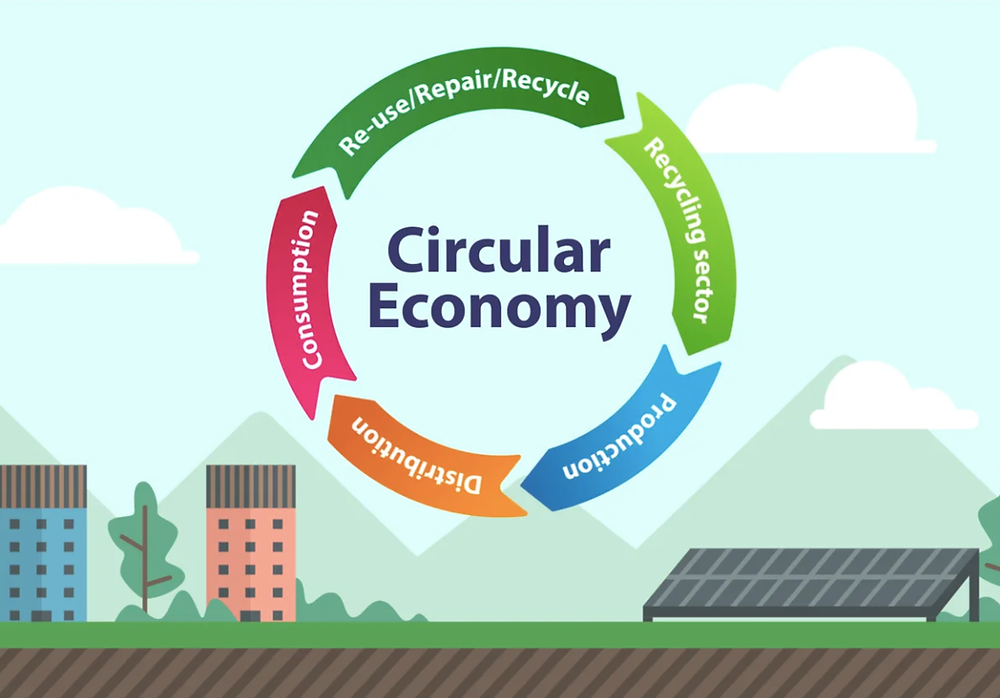
“We’ve been fixated on the “end-of-life” recycling bin, patting ourselves on the back for tossing a plastic bottle into the right bin. Rashid and Malik argue this is missing the point entirely. True circularity starts at the drawing board. It’s about designing products—from smartphones to solar panels—to be repaired, refurbished, and disassembled from the very beginning. It’s about creating industrial systems where one factory’s waste heat becomes another’s power source.”
He noted that this isn’t just waste management; it’s a trillion-dollar opportunity for innovation in design, manufacturing, and logistics. Many still do not understand the true calling of a circular economy.
“This is where their second critical insight comes in: renewable energy is the indispensable engine of a true circular economy. You cannot power a circular system with fossil fuels. The logic is devastatingly simple. A circular model aims to keep materials in a continuous loop of use. If you use dirty, extractive energy to recycle a material or remanufacture a product, you are simply trading a waste problem for a carbon emissions problem. You are circular in material but remain linear and polluting in energy. Rashid and Malik position renewables as the “bloodstream” of the circular body—without this clean energy source, the system cannot live. Solar, wind, and geothermal provide the clean power needed to close material loops without undermining the climate goals that make the transition necessary in the first place.”
Read further here.