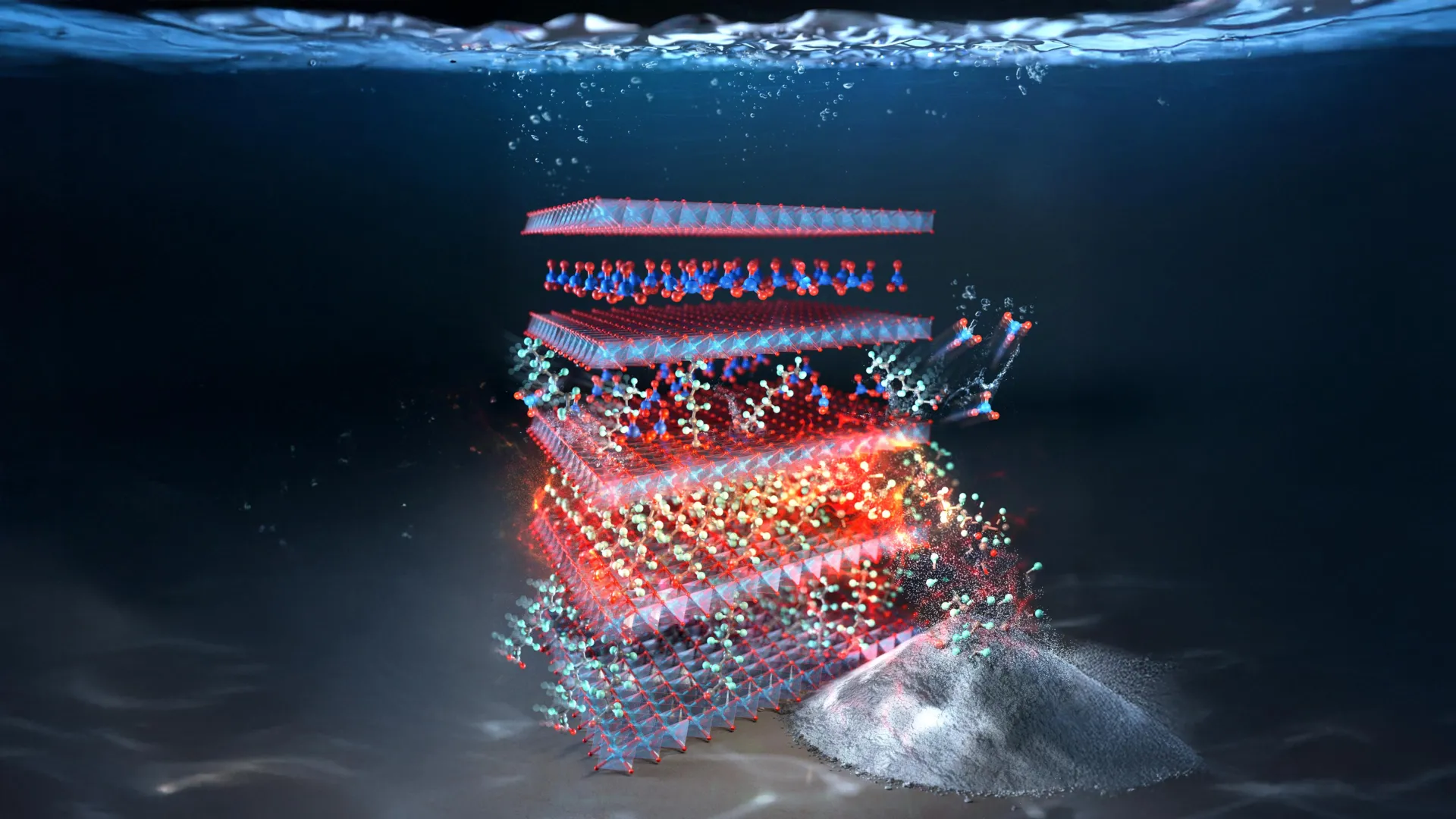
A research team at Rice University, working with international collaborators, has created the first environmentally friendly technology that can quickly trap and break down toxic “forever chemicals” (PFAS) in water. The results, published recently in Advanced Materials, represent a meaningful advance against one of the most stubborn pollution threats worldwide.
The project was led by Youngkun Chung, a postdoctoral fellow mentored by Michael S. Wong, a professor at Rice’s George R. Brown School of Engineering and Computing. The effort also included Seoktae Kang, a professor at the Korea Advanced Institute of Science and Technology (KAIST), and Keon-Ham Kim, a professor at Pukyung National University in South Korea.
PFAS, short for per- and polyfluoroalkyl substances, are man-made chemicals that date back to the 1940s. They have been used in many everyday products, including Teflon pans, waterproof clothing, and some food packaging. PFAS became popular because they resist heat, grease, and water, but that same durability also means they break down very slowly, which is why they are often called “forever chemicals.”
PFAS have now spread widely and can be found in water, soil, and air around the world. Research has linked exposure to liver damage, reproductive disorders, immune system disruption, and certain cancers. Cleanup has been difficult because once PFAS enter the environment, they are hard to remove and even harder to destroy.
Read more here.