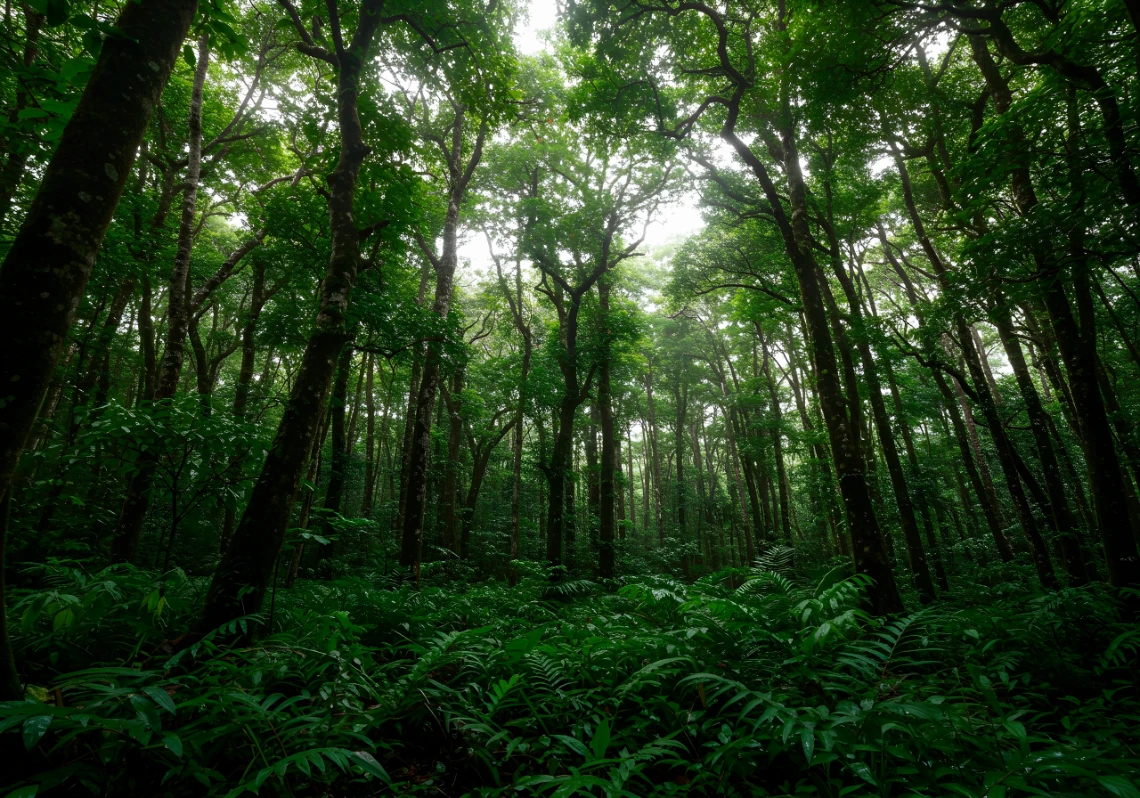
A sweeping global study warns that forests are becoming dominated by fast-growing trees, while slow-growing species that stabilize ecosystems are fading away. This shift could leave forests less diverse, less resilient, and less capable of protecting the planet from climate change.
Trees are essential to life on Earth. They absorb and store CO2, support animals, fungi, and insects, hold soil in place, manage water cycles, and provide people with vital resources such as wood, food, and cooling shade during hot weather.
Despite their importance, forests around the world are undergoing a major shift. New research shows that many forest ecosystems are becoming more uniform, losing biodiversity, and growing less resilient. These findings come from a large international study published in the journal Nature Plants.
By examining more than 31,000 tree species across the globe, scientists were able to map how forests are likely to change in the coming decades. Their analysis focused on shifts in species makeup, long-term stability, and how forests function as ecosystems.
The study found that fast-growing tree species are becoming increasingly dominant. At the same time, slower-growing trees with specialized traits face a growing risk of decline or extinction.
Jens-Christian Svenning, Professor and Director of the Danish National Research Foundation’s Center for Ecological Dynamics in a Novel Biosphere (ECONOVO) at the Department of Biology, Aarhus University, and a senior author of the study, says this trend is deeply concerning.
Read more here.