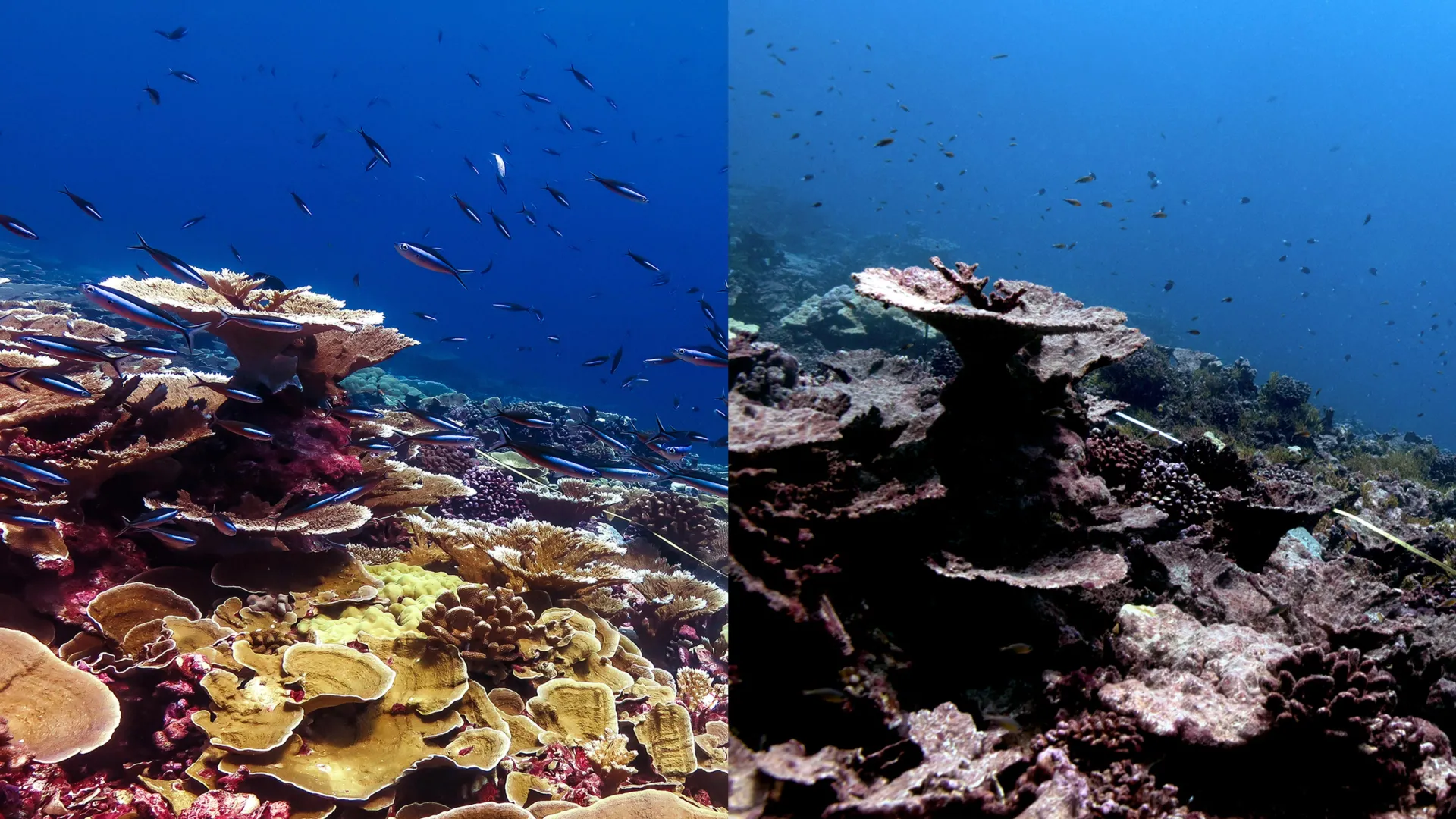
Coral reefs provide enormous value to people around the world. They support fisheries, power tourism industries, protect coastlines from storms, and even help scientists discover new medicines. Altogether, these benefits are estimated to be worth about $9.8 trillion each year, online portal Science Daily reported.
Now, researchers report that a global marine heatwave caused widespread coral bleaching, damaging roughly half of the world’s reefs. The findings, led by scientists at the Smithsonian, mark the first time the global extent of bleaching during such an event has been carefully calculated. A new heatwave that began in 2023 is still unfolding. The study appears in Nature Communications.
Coral is built on a close partnership between two living organisms. One is a tiny animal related to jellyfish that creates the hard reef structure. The other is microscopic algae that live inside the coral’s tissues and use sunlight to produce energy, which feeds the coral.
When ocean temperatures rise too high, this partnership breaks down. The coral expels the algae that supply its energy and turns white, a condition known as bleaching. Without its algae, coral grows more slowly, reproduces less, and can die if the heat stress is intense or lasts too long.
Read more here.