On 28 February 2026, coordinated US–Israel strikes on Iran under Operation Epic Fury and Operation Roaring Lion triggered regional Iranian retaliation across the Gulf, including attacks against targets in Qatar, the United Arab Emirates (UAE), Kuwait, Bahrain, and Saudi Arabia.
According to defence news portal, Janes, Iran’s actions increased maritime security risks in and around the critical Strait of Hormuz, where at least three commercial vessels suffered damage from suspected projectiles on 1–2 March, according to the UK Maritime Trade Operations (UKMTO) Centre.
The heightened threat environment has already led insurers to withdraw or reprice coverage for transits through the strait, while major carriers – including Maersk – began rerouting traffic via the Cape of Good Hope.
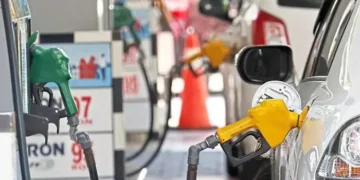
By 2 March, vessel passages through Hormuz had decreased substantially, indicating a widening disruption to global oil and liquified natural gas (LNG) flows and heightening strategic risk for import‑dependent economies.
Approximately 21 million barrels of oil a day – in the form of crude, condensates and petroleum products – pass through the Strait of Hormuz daily, according to the US Energy Information Administration (EIA). This is equivalent to around 21% of global supply.
Read the rest of the article here.