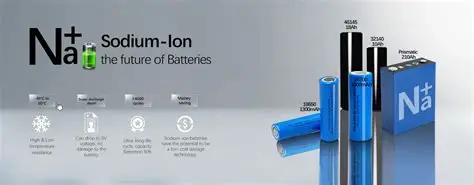
As the rest of the world tries to catch up with China in making lithium-ion batteries, Chinese manufacturers have already moved into a new battleground: sodium-ion, a technology that is set to revolutionise battery supply chains, reported Reuters.
While lithium-ion batteries rely on raw materials mined and processed in a handful of countries, these new-generation batteries use sodium, an abundant element that can be extracted from seawater. They also have superior stability at low temperatures and can be charged more rapidly.
While Chinese companies have commercialised lithium iron phosphate batteries, which do not use cobalt or nickel, lithium is still a choke point: around 60% of the lithium ore China refined in 2024 was imported, mainly from Australia and South America.
According to a report by the International Renewable Energy Agency, sodium is around 1,000 times more abundant than lithium in the Earth’s crust and roughly 60,000 times more abundant in the oceans. “This makes sodium-ion batteries less vulnerable to supply-chain risks and raw materials’ price swings,” says Liu Chenguang, a researcher at Xi’an Jiaotong-Liverpool University in Suzhou, China.
Phate Zhang, founder of the Shanghai-based EV news outlet CnEVPost, says Chinese battery makers “scrambled to find alternatives” to lithium after prices for the mineral climbed steeply from late 2021, due to COVID-19 lockdowns and strong demand for EVs.
While several startups, mainly in the U.S., are preparing for pilot scale production of sodium-ion batteries, in China manufacturers have already moved into mass production, for both transport and large-scale energy storage.
Read the rest of the report here.