• About Us
  • Contact Us
SUBSCRIBE
Saturday, June 6, 2026
No Result
View All Result
Green Mile
Advertisement
  • Spotlights
  • Sustainability
  • Waste Management
  • Green Innovations
  • Industries
    • Oil & Gas
    • Re-refinery
    • Maritime
    • Automotive
    • Manufacturing
    • Plantation
  • News
    • News
    • EPR Updates
    • Base Oil Update
  • eMag
  • Spotlights
  • Sustainability
  • Waste Management
  • Green Innovations
  • Industries
    • Oil & Gas
    • Re-refinery
    • Maritime
    • Automotive
    • Manufacturing
    • Plantation
  • News
    • News
    • EPR Updates
    • Base Oil Update
  • eMag
No Result
View All Result
Green Mile
No Result
View All Result
Home News

In China, battery makers bet big on sodium in move away from critical minerals

Sodium ion batteries, which can be made from seawater, avoids environmental challenges of lithium-ion and they can perform well at temperatures as low as -40C.

rakesh by rakesh
17/03/2026
in News
0
In China, battery makers bet big on sodium in move away from critical minerals
0
SHARES
0
VIEWS
Share on FacebookShare on LinkedinShare to EmailShare to WhatsAppShare to TelegramShare to ChatGPTShare to Pinterest

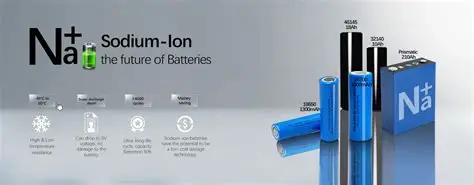
As the rest of the world tries to catch up with China in making lithium-ion batteries, Chinese manufacturers have already moved into a new battleground: sodium-ion, a technology that is set to revolutionise battery supply chains, reported Reuters.

While lithium-ion batteries rely on raw materials mined and processed in a handful of countries, these new-generation batteries use sodium, an abundant element that can be extracted from seawater. They also have superior stability at low temperatures and can be charged more rapidly.

While Chinese companies have commercialised lithium iron phosphate batteries, which do not use cobalt or nickel, lithium is still a choke point: around 60% of the lithium ore China refined in 2024 was imported, mainly from Australia and South America.

According to a report by the International Renewable Energy Agency, sodium is around 1,000 ‌times more abundant than lithium in the Earth’s crust and roughly 60,000 times more abundant in the oceans. “This makes sodium-ion batteries less vulnerable to supply-chain risks and raw materials’ price swings,” says Liu Chenguang, a researcher at Xi’an Jiaotong-Liverpool University in Suzhou, China.

Phate Zhang, founder of the Shanghai-based EV news outlet CnEVPost, says Chinese battery makers “scrambled to find alternatives” to lithium after prices for the mineral climbed steeply from late 2021, due to COVID-19 lockdowns and strong demand for EVs.

While several startups, mainly in the U.S., are preparing for pilot scale production of sodium-ion batteries, in China manufacturers have already moved into mass production, for both transport and large-scale energy storage.

Read the rest of the report here.

Previous Post

India may soften new grid-supply rules for renewable power producers

Next Post

Reliance signs $3 billion green ammonia supply deal with South Korea’s Samsung C&T

rakesh

rakesh

Related Posts

Decarbonisation a ‘critical corporate priority’ for Mitsubishi Corporation
News

Decarbonisation a ‘critical corporate priority’ for Mitsubishi Corporation

by rakesh
31/03/2026
Sustainability at scale: The Siemens Playbook for India’s net-zero future – Forbes
News

Sustainability at scale: The Siemens Playbook for India’s net-zero future – Forbes

by rakesh
31/03/2026
Tourism Australia unveils industry sustainability initiative
News

Tourism Australia unveils industry sustainability initiative

by rakesh
31/03/2026
SAF: The most promising path to green flight.
News

Rising oil prices amid Iran war renew focus on sustainable aviation fuel – CNA

by rakesh
31/03/2026
Sustainability increasingly linked to financial performance, study finds
News

Sustainability increasingly linked to financial performance, study finds

by rakesh
31/03/2026
Next Post
Reliance signs $3 billion green ammonia supply deal with South Korea’s Samsung C&T

Reliance signs $3 billion green ammonia supply deal with South Korea's Samsung C&T

Premium Content

Mass Fish Release In Pune, India, Aims To Revive Ecosystem Disrupted By Invasive Species

Mass Fish Release In Pune, India, Aims To Revive Ecosystem Disrupted By Invasive Species

24/02/2026
Major environmental laws are about to pass after ‘tough’ negotiations in Australia

Major environmental laws are about to pass after ‘tough’ negotiations in Australia

28/11/2025
Green win for commuters at two LRT stations in KL

Green win for commuters at two LRT stations in KL

06/01/2026

Browse by Category

  • Automotive
  • Green Innovations
  • Maritime
  • News
  • Oil & Gas
  • Plantation
  • Re-refinery
  • Spotlights
  • Sustainability
  • Waste Management
Green Mile

Green Mile (GM) is a leading online magazine dedicated to fostering sustainable waste management practices, sustainability and the circular economy.

Categories

  • Automotive
  • Green Innovations
  • Maritime
  • News
  • Oil & Gas
  • Plantation
  • Re-refinery
  • Spotlights
  • Sustainability
  • Waste Management

Recent Posts

  • Decarbonisation a ‘critical corporate priority’ for Mitsubishi Corporation
  • Sustainability at scale: The Siemens Playbook for India’s net-zero future – Forbes
  • Tourism Australia unveils industry sustainability initiative

Contact Us

HQ address:
Level 23A, EXSIM Tower @ Millerz Square,
Jalan Klang Lama, 58000 Kuala Lumpur.
Office no: ‪+603-8080 1000‬

Gunaprasth Bupalan, Editor-In-Chief
Guna@greenmile.com.my
Contact no: ‪+6017-920 3544‬

Jeffrey Chiak- Head of Marketing
jeffrey@greenmile.com.my
H/P no: 6012-358 7296

© 2025 Green Mile Communications Sdn. Bhd. 202501049682 (1651090-M) | Developed by CL Online Marketing Agency

No Result
View All Result
  • Home
  • Sustainability
  • Waste Management
  • Green Innovations
  • Oil & Gas
  • Re-refinery
  • Plantation
  • Maritime
  • Automotive
  • Manufacturing
  • EPR Updates

© 2025 Green Mile Communications Sdn. Bhd. 202501049682 (1651090-M) | Developed by CL Online Marketing Agency