Collaboration to prevent harmful air pollution from travelling across borders could prevent as many as 1.32 million premature deaths each year by 2040, according to researchers at University of Colorado Boulder and Cardiff University, Sustainability Online reported.
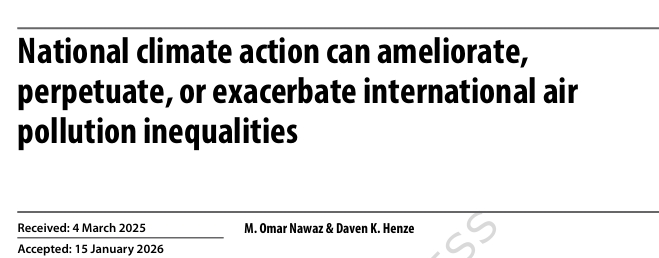
According to the study, National climate action can ameliorate, perpetuate, or exacerbate international air pollution inequalities, which was published in Nature Communications, developing countries in particular are reliant on international action to improve air quality, as much of their pollution comes from outside their borders.
“Some climate policies could inadvertently make air pollution inequalities worse, specifically for developing nations that might rely heavily on their neighbours for clean air,” commented Daven Henze, senior author of the new study and professor at the Paul M. Rady Department of Mechanical Engineering at CU Boulder.
“Holistic climate policy should therefore evaluate how dependent a nation is on others’ emissions reductions, how mitigation scenarios reshape air-pollution flows across borders, and whether global efforts are helping or harming equity.”
As the research found, developing countries, particularly in Africa and Asia, are strongly reliant on emissions reduction efforts in other countries to improve their own air quality.
As lead author Omar Nawaz, Cardiff University School of Earth and Environmental Sciences, noted, while studies to date have focused on how “climate action can benefit public health, most research has ignored how this affects the air pollution that travels across international borders and creates inequalities between countries”.
Read the rest here.