


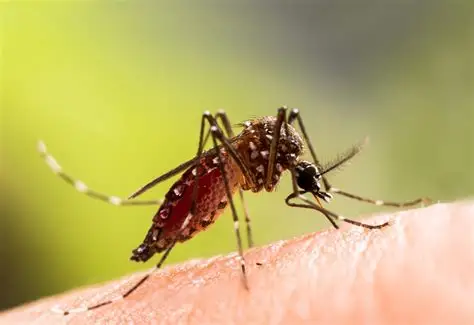
Running along Brazil’s coastline, the Atlantic Forest supports an extraordinary range of life, including hundreds of species of birds, amphibians, reptiles, mammals, and fishes. Much of that richness has been lost. Human development has reduced the forest to roughly one third of its original size. As people move deeper into once intact habitats, wildlife is pushed out, and mosquitoes that once fed on many different animals appear to be shifting their attention toward humans, according to a study published in Frontiers in Ecology and Evolution.
“Here we show that the mosquito species we captured in remnants of the Atlantic Forest have a clear preference for feeding on humans,” said senior author Dr. Jeronimo Alencar, a biologist at the Oswaldo Cruz Institute in Rio de Janeiro.
“This is crucial because, in a environment like the Atlantic Forest with a great diversity of potential vertebrate hosts, a preference for humans significantly enhances the risk of pathogen transmission,” added co-author Dr. Sergio Machado, a microbiology and immunology researcher at the Federal University of Rio de Janeiro.


