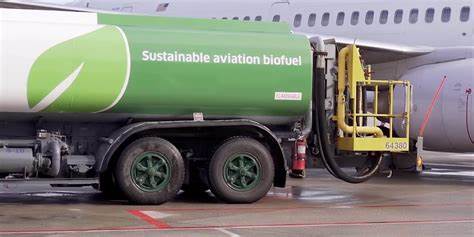
A new comprehensive review by Klimczyk, Jasiński, Niklas, and Siedlecki cuts through the hype with precision, revealing a simple, uncomfortable truth: Sustainable Aviation Fuel (SAF) is indeed the only viable path to decarbonising aviation in the near-term, but the journey to making it truly sustainable is far more complex and perilous than we’ve been led to believe, writes Ahmad Ibrahim for The Malay Mail.
The author is affiliated with the Tan Sri Omar Centre for STI Policy Studies at UCSI University and is an Adjunct Professor at the Ungku Aziz Centre for Development Studies, Universiti Malaya.
He spoke off a new comprehensive review by Klimczyk, Jasiński, Niklas, and Siedlecki that cuts through the hype with precision, revealing a simple, uncomfortable truth: “SAF is indeed the only viable path to decarbonising aviation in the near-term, but the journey to making it truly sustainable is far more complex and perilous than we’ve been led to believe,” he writes.
The review, he notes, exposes the critical trade-offs. “Do we use a waste feedstock like forestry residues, which has minimal land-use impact, or do we cultivate dedicated energy crops that might be more efficient but could compete with food production or drive deforestation?”
The authors clearly he says, lay out the menu of production pathways. “We have the established workhorses, like HEFA (Hydroprocessed Esters and Fatty Acids), which can turn used cooking oil into jet fuel today. It’s the low-hanging fruit.
“Then we have the promising but pricey future: alcohol-to-jet, gasification of agricultural residues, and the holy grail — power-to-liquid (PtL) or e-fuels, synthesised from captured carbon and green hydrogen. And herein lies the first critical insight: There is no single “best” SAF. The right choice is entirely contextual, a delicate and location-specific calculus of feedstock availability, energy input, and ultimate environmental payoff. “
Read the full article here.