• About Us
  • Contact Us
SUBSCRIBE
Friday, April 17, 2026
No Result
View All Result
Green Mile
Advertisement
  • Spotlights
  • Sustainability
  • Waste Management
  • Green Innovations
  • Industries
    • Oil & Gas
    • Re-refinery
    • Maritime
    • Automotive
    • Manufacturing
    • Plantation
  • News
    • News
    • EPR Updates
    • Base Oil Update
  • eMag
  • Spotlights
  • Sustainability
  • Waste Management
  • Green Innovations
  • Industries
    • Oil & Gas
    • Re-refinery
    • Maritime
    • Automotive
    • Manufacturing
    • Plantation
  • News
    • News
    • EPR Updates
    • Base Oil Update
  • eMag
No Result
View All Result
Green Mile
No Result
View All Result
Home News

Scientists Create New Plastic That Self-Destructs After Use in Breakthrough Research

The research team used a 'new chemical strategy' to create plastic that would degrade naturally.

rakesh by rakesh
13/03/2026
in News
0
Scientists Create New Plastic That Self-Destructs After Use in Breakthrough Research

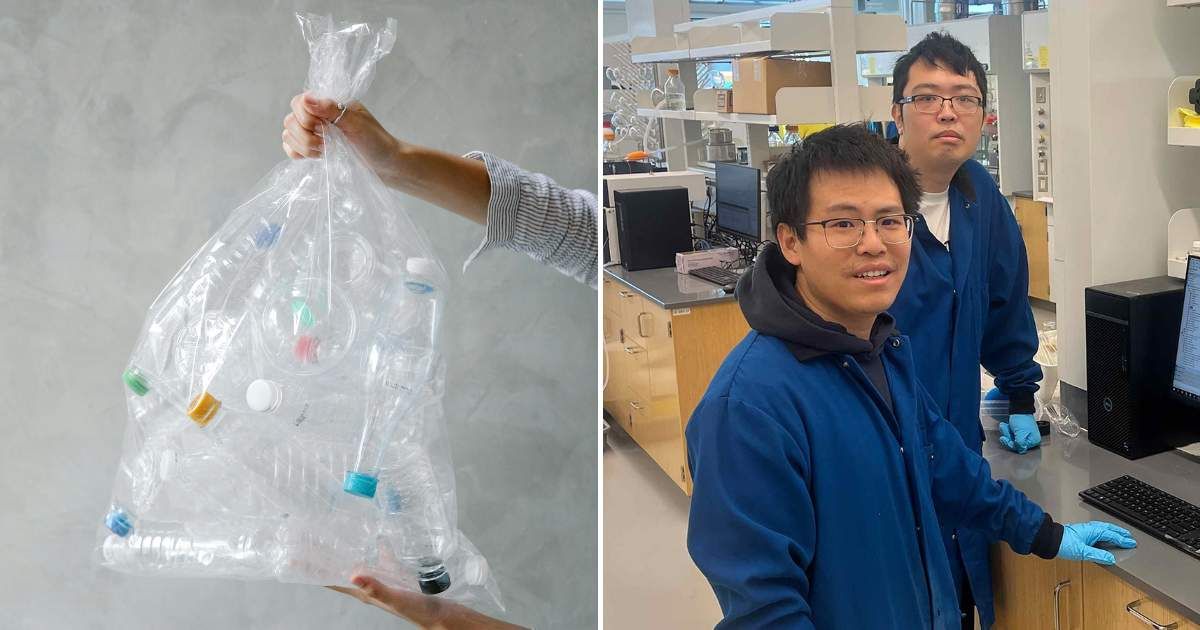
(L) A bag of plastic bottles; (R) Rutgers University researchers. (Cover Image Source: (L) Pexels | Sarah Chai; (R) Rutgers University.

0
SHARES
0
VIEWS
Share on FacebookShare on LinkedinShare to EmailShare to WhatsAppShare to TelegramShare to ChatGPTShare to Pinterest

Plastics are rotting the world, turning natural habitats into junkyards. More than 90% of manufactured plastics end up in the environment, polluting landscapes and water bodies, harming ecosystems, and impacting human health.

According to Green Matters portal, humanity’s economic model of take-make-waste in linear manufacturing of plastics is the complete opposite of the natural system.

“Nature works in a cycle where every nutrient drawn eventually returns and replenishes the Earth, like how nutrients from animals and plants are returned to the soil. Even though plastics are made of natural materials, they don’t bring the same value back and instead pile up and pollute the environment” it noted.

Which is why scientists at Rutgers University were inspired by the circularity of natural materials and aimed to achieve the same for plastics in a recent experiment.

The researchers believe they have found a groundbreaking solution that would enable the circularity of hazardous materials such as plastics. In the study published last November in Nature Chemistry, the researchers elaborated on their newly developed molecular structure for plastic.

Similar to natural materials, this new structure of plastic would self-destruct after completing its lifespan. Scientists have hopes that this timely self-destruction can be included in future manufactured plastic products, making plastic waste disposal sustainable by a large margin.

Read further here.


Previous Post

Shell’s emissions broadly stable at around 1.1 bln tons CO2 equivalent

Next Post

From warships to oil fires: How the Gulf fight is poisoning the planet – AFP

rakesh

rakesh

Related Posts

Decarbonisation a ‘critical corporate priority’ for Mitsubishi Corporation
News

Decarbonisation a ‘critical corporate priority’ for Mitsubishi Corporation

by rakesh
31/03/2026
Sustainability at scale: The Siemens Playbook for India’s net-zero future – Forbes
News

Sustainability at scale: The Siemens Playbook for India’s net-zero future – Forbes

by rakesh
31/03/2026
Tourism Australia unveils industry sustainability initiative
News

Tourism Australia unveils industry sustainability initiative

by rakesh
31/03/2026
SAF: The most promising path to green flight.
News

Rising oil prices amid Iran war renew focus on sustainable aviation fuel – CNA

by rakesh
31/03/2026
Sustainability increasingly linked to financial performance, study finds
News

Sustainability increasingly linked to financial performance, study finds

by rakesh
31/03/2026
Next Post
From warships to oil fires: How the Gulf fight is poisoning the planet – AFP

From warships to oil fires: How the Gulf fight is poisoning the planet – AFP

Premium Content

Sabah receives RM22.75mil EFT grant for biodiversity conservation

Sabah receives RM22.75mil EFT grant for biodiversity conservation

10/03/2026
Fossil fuel emissions to rise again in 2025 with signs of decline in the future.

Fossil fuel emissions to rise again in 2025 with signs of decline in the future.

20/11/2025
Decades-long contracts chain Asia to coal-fired power: CNA Report

Decades-long contracts chain Asia to coal-fired power: CNA Report

26/11/2025

Browse by Category

  • Automotive
  • Green Innovations
  • Maritime
  • News
  • Oil & Gas
  • Plantation
  • Re-refinery
  • Spotlights
  • Sustainability
  • Waste Management
Green Mile

Green Mile (GM) is a leading online magazine dedicated to fostering sustainable waste management practices, sustainability and the circular economy.

Categories

  • Automotive
  • Green Innovations
  • Maritime
  • News
  • Oil & Gas
  • Plantation
  • Re-refinery
  • Spotlights
  • Sustainability
  • Waste Management

Recent Posts

  • Decarbonisation a ‘critical corporate priority’ for Mitsubishi Corporation
  • Sustainability at scale: The Siemens Playbook for India’s net-zero future – Forbes
  • Tourism Australia unveils industry sustainability initiative

Contact Us

HQ address:
Level 23A, EXSIM Tower @ Millerz Square,
Jalan Klang Lama, 58000 Kuala Lumpur.
Office no: ‪+603-8080 1000‬

Gunaprasth Bupalan, Editor-In-Chief
Guna@greenmile.com.my
Contact no: ‪+6017-920 3544‬

Jeffrey Chiak- Head of Marketing
jeffrey@greenmile.com.my
H/P no: 6012-358 7296

© 2025 Green Mile Communications Sdn. Bhd. 202501049682 (1651090-M) | Developed by CL Online Marketing Agency

No Result
View All Result
  • Home
  • Sustainability
  • Waste Management
  • Green Innovations
  • Oil & Gas
  • Re-refinery
  • Plantation
  • Maritime
  • Automotive
  • Manufacturing
  • EPR Updates

© 2025 Green Mile Communications Sdn. Bhd. 202501049682 (1651090-M) | Developed by CL Online Marketing Agency