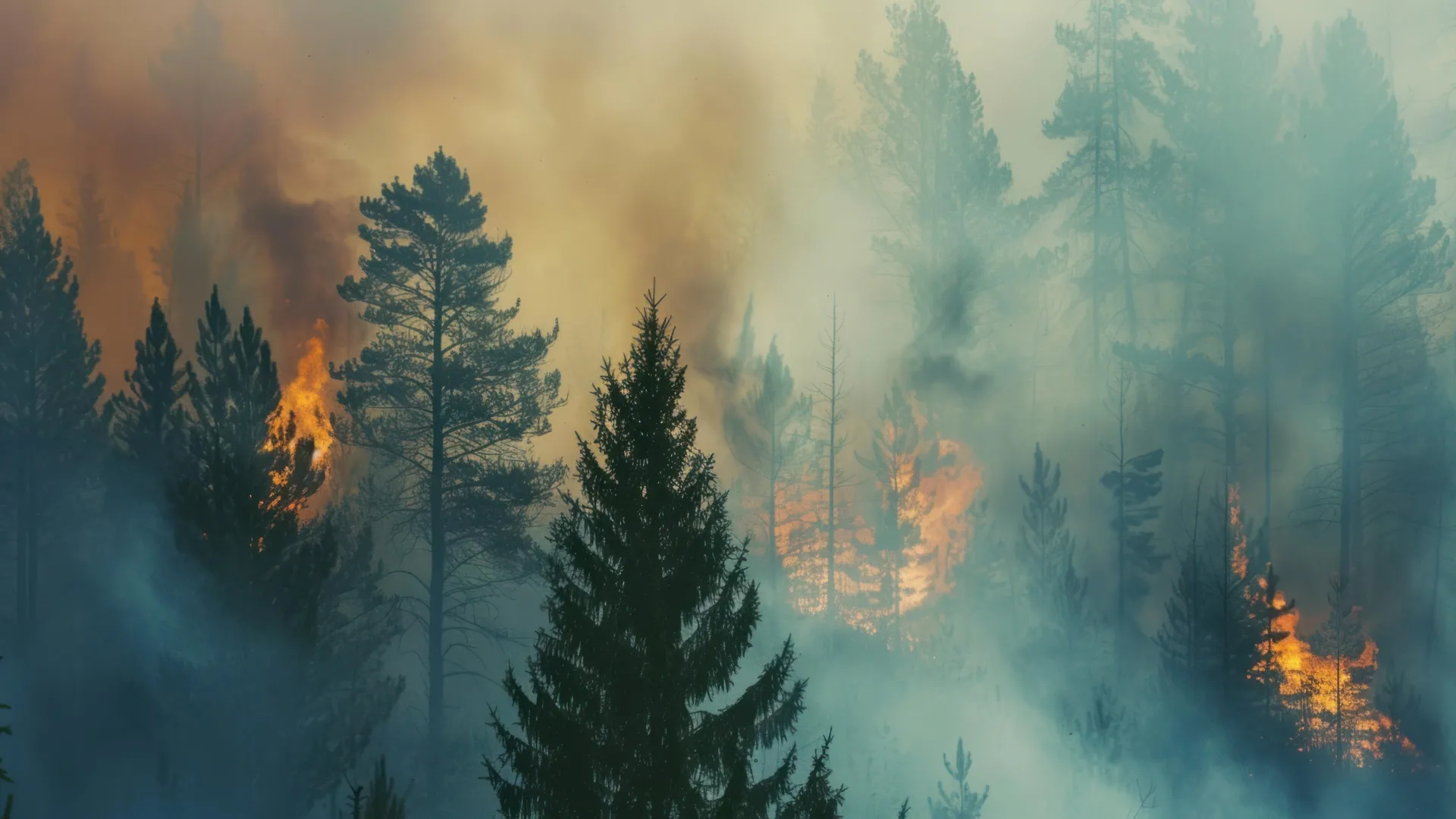
Wildfires are emitting much more pollution than earlier studies suggested, driven by gases that easily turn into harmful particles. These findings reveal why smoke from fires can have lasting and serious impacts on air quality and health. Credit: Shutterstock
As wildfires move across forests, grasslands, and peatlands, they release large amounts of gases and particles into the air. Scientists now say the pollution from these fires may have been underestimated. A study published in ACS’ Environmental Science & Technology reports that wildfires and prescribed burns (i.e., wildland fires) around the world likely emit much higher levels of gases that contribute to air pollution than earlier estimates suggested. The research also highlights several regions where emissions from fires overlap with pollution from human activities, creating especially difficult air quality challenges.
“Our new estimates increase the organic compound emissions from wildland fires by about 21%,” says Lyuyin Huang, the first author of the study. “The inventory provides a foundation for more detailed air-quality modeling, health-risk assessment, and climate-related policy analysis.”
Each year, wildfires burn through vast areas of vegetation, sending a complex mixture of water vapor, ash, and carbon-based chemicals into the atmosphere. Some of these chemicals are volatile organic compounds (VOCs), which readily exist as gases. Others only evaporate and become gases at warmer temperatures and are classified as intermediate- and semi-volatile organic compounds (IVOCs and SVOCs, respectively). Once in the air, these partially volatile compounds more easily form fine particles that can be harmful if breathed in, compared with VOCs.
Read further here.