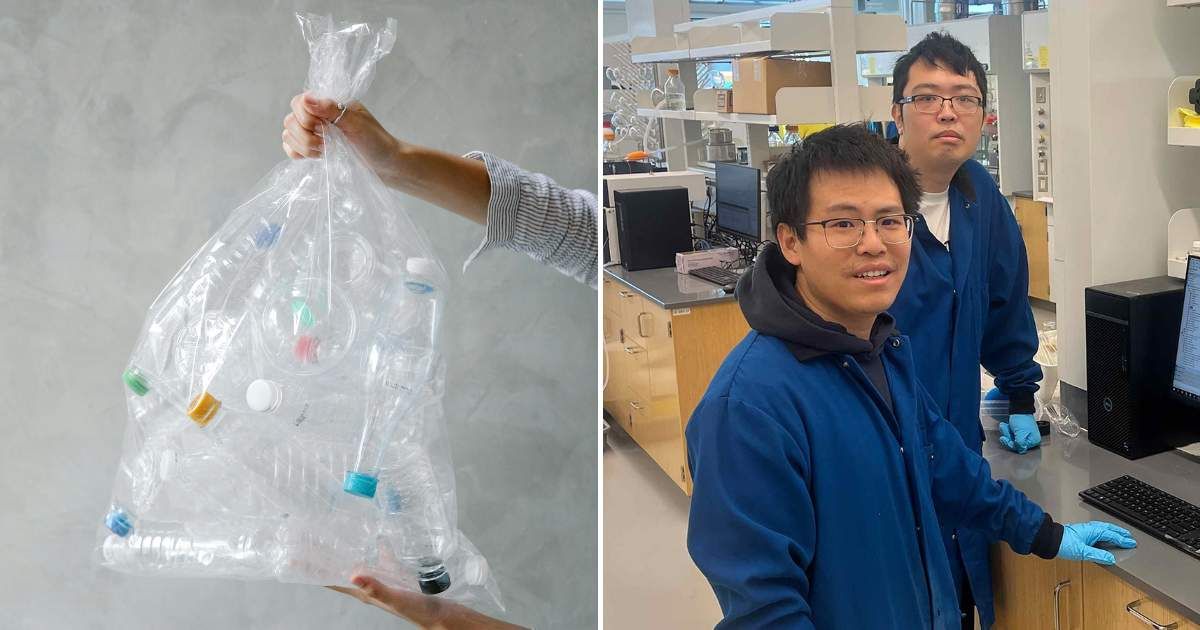
Plastics are rotting the world, turning natural habitats into junkyards. More than 90% of manufactured plastics end up in the environment, polluting landscapes and water bodies, harming ecosystems, and impacting human health.
According to Green Matters portal, humanity’s economic model of take-make-waste in linear manufacturing of plastics is the complete opposite of the natural system.
“Nature works in a cycle where every nutrient drawn eventually returns and replenishes the Earth, like how nutrients from animals and plants are returned to the soil. Even though plastics are made of natural materials, they don’t bring the same value back and instead pile up and pollute the environment” it noted.
Which is why scientists at Rutgers University were inspired by the circularity of natural materials and aimed to achieve the same for plastics in a recent experiment.
The researchers believe they have found a groundbreaking solution that would enable the circularity of hazardous materials such as plastics. In the study published last November in Nature Chemistry, the researchers elaborated on their newly developed molecular structure for plastic.
Similar to natural materials, this new structure of plastic would self-destruct after completing its lifespan. Scientists have hopes that this timely self-destruction can be included in future manufactured plastic products, making plastic waste disposal sustainable by a large margin.
Read further here.