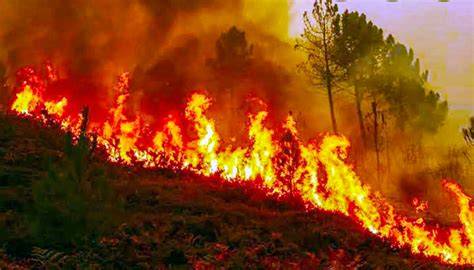
The number of days with fire-prone conditions globally has nearly tripled in the past 45 years, with more than half of that increase linked to human-caused climate change, according to a new study, according to Earth.org.
Fire-prone conditions arise when elevated temperatures are accompanied by dry and windy weather. Dry leaves and vegetation acts as fuel, while strong winds can spread wildfires further and faster, making them more difficult to control. Such conditions have been blamed for several recent wildfires events, from those in Los Angeles in January 2025 to the more recent ones affecting southern Australia.
The new study, published Wednesday in Science Advances, identified “significant increases” in synchronous fire weather – when multiple places have the right conditions for fires to occur within a few days of each other – between 1979 and 2024. The annual number of such days went from an average of 22 between 1979 and 1984 to more than 60 days in 2023 and 2024.
The Americas are particularly vulnerable, lead author Cong Yin said, as reported by the Associated Press. In continental US, the number of such days averaged 7.7 between 1979 and 1988. The past decade saw 38 such days per year. Meanwhile, the southern part of South America went from an average of 5.5 synchronous fire weather days a year from 1979 to 1988 to over 70.6 over the last decade, including 118 such days in 2023.
Read more here.