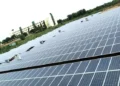
Grid operator LUMA Energy’s Customer Battery Energy Sharing program pays owners of distributed batteries (who have installed batteries together with rooftop solar systems) to use some of their stored energy to supply the grid when it risks being short on power, reported Institute for Energy Economics and Financial Analysis.
As of October 2025, 81,104 customers were enrolled in the program, totaling 500 megawatts (MW) of battery capacity – the size of a major centralized power plant. However, not all of that capacity is available to be called on at any given time. During the peak demand season from June to October 2025, this virtual battery was dispatched 49 times, using an average of 33MW per event. In many cases, it was used to avoid or reduce the magnitude of rolling blackouts when available generation capacity was insufficient to meet demand.
Over the past year, Puerto Rico has undertaken numerous initiatives to address its ongoing generation reliability problems. These include plans for new gas plants and utility-scale battery storage. However, the aggregation of distributed batteries as a “virtual power plant” (VPP) has proved to be the fastest solution to begin to address Puerto Rico’s ongoing generation reliability problems.
In October 2024, LUMA published a Resource Adequacy Study that quantified the shortfall of reliable generation capacity and evaluated different options to address it. Following standard industry practice, the study took a probabilistic approach – based on the probability that any given generating unit would be offline in any given hour – to estimate how many hours of the year demand on the system would exceed available power supply under different scenarios.
In the base case, LUMA estimated that Puerto Ricans would experience rolling blackouts due to generation shortfalls in 36 days in fiscal year 2025. LUMA then evaluated new fossil fuel power plants, utility-scale battery storage, utility-scale renewable energy, and demand response to determine how much the addition of different resources to the system would reduce the hours of unserved load. (A VPP was not one of the options considered.) The study used the U.S. industry standard of one hour of lost load every 10 years. Two of LUMA’s scenarios met this standard:
The addition of 1240MW of utility-scale battery storage, or;
A new thermal power plant of approximately 1,000MW.
Read further here.