• About Us
  • Contact Us
SUBSCRIBE
Friday, October 30, 2026
No Result
View All Result
Green Mile
Advertisement
  • Spotlights
  • Sustainability
  • Waste Management
  • Green Innovations
  • Industries
    • Oil & Gas
    • Re-refinery
    • Maritime
    • Automotive
    • Manufacturing
    • Plantation
  • News
    • News
    • EPR Updates
    • Base Oil Update
  • eMag
  • Spotlights
  • Sustainability
  • Waste Management
  • Green Innovations
  • Industries
    • Oil & Gas
    • Re-refinery
    • Maritime
    • Automotive
    • Manufacturing
    • Plantation
  • News
    • News
    • EPR Updates
    • Base Oil Update
  • eMag
No Result
View All Result
Green Mile
No Result
View All Result
Home News

Commentary: Trade wars destroy the planet

The current US-China trade relationship externalises pollution and erodes the world’s capacity to fight climate change, says Chinese Academy of Social Sciences’ Qiyuan Xu.

rakesh by rakesh
22/01/2026
in News
0
Commentary: Trade wars destroy the planet

Picture credit: cryptorank.io

0
SHARES
2
VIEWS
Share on FacebookShare on LinkedinShare to EmailShare to WhatsAppShare to TelegramShare to ChatGPTShare to Pinterest

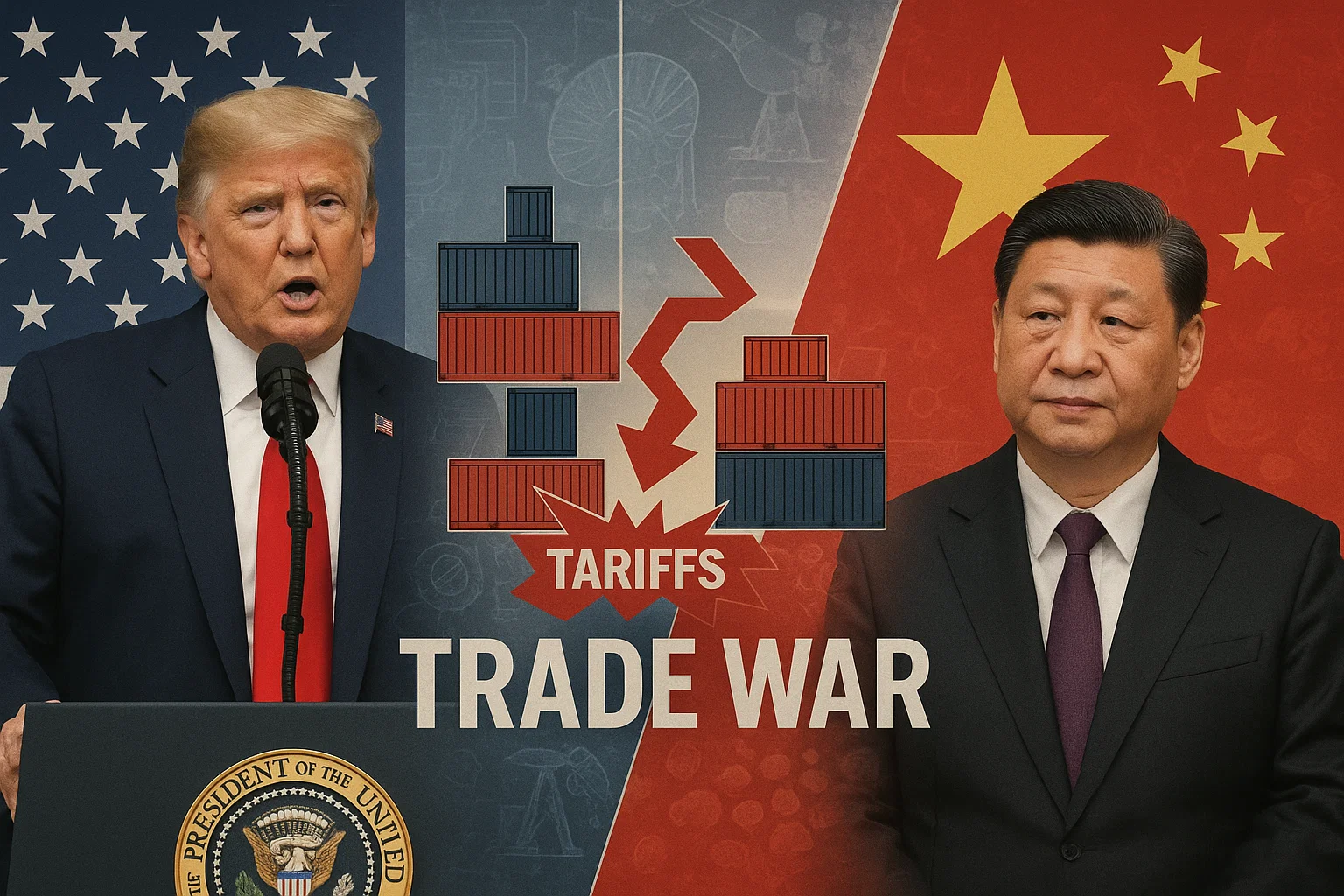
A commentary appearing in CNA noted that tariff wars are often justified as necessary to protect or reshore manufacturing jobs and to improve national security. Yet, according to new research, these conflicts produce another outcome that is largely overlooked: pollution. When global supply chains are forced into inefficient detours, it noted carbon dioxide emissions rise.

Says the author Qiyuan XuIn a recent study of the US-China trade conflict’s environmental effects, “my co-authors and I found that tariffs have directly increased global CO2 emissions”.

“Based on our calculations, if both sides were to impose a 60 per cent tariff on imports from the other – a level consistent with the recent escalations in April – this would lead to a one-time increase in global emissions of nearly 410 million tonnes, roughly the same amount produced by 165 million gas-powered cars (with 1.6 litre engines) each travelling 10,000 kilometres,” the author noted.

“In effect, China bears a disproportionate share of the world’s emission-intensive production. According to the UNCTAD-EORA Global Value Chain database, in 2017 (before the trade war between the United States and China began), 33.9 per cent of the carbon embodied in US imports originated in China. These emissions did not vanish once tariffs disrupted bilateral trade; they have either been re-imported by the US through costlier domestic production or diverted to third countries.”

Read the full commentary here.
Previous Post

Singapore studies hydrogen adoption as power firms prepare for cleaner fuel – CNA

Next Post

This new building material pulls carbon out of the air

rakesh

rakesh

Related Posts

Lynas Plans One-Month Shutdown at Malaysian Rare-Earth Refinery for Maintenance
News

Lynas Plans One-Month Shutdown at Malaysian Rare-Earth Refinery for Maintenance

by jeffrey
30/10/2026
SD Guthrie, YTL Power and Bumi Assets Plan 1,623-Acre Industrial Development in Selangor
News

SD Guthrie, YTL Power and Bumi Assets Plan 1,623-Acre Industrial Development in Selangor

by jeffrey
30/10/2026
Dialog Secures Thailand Oil and Gas Concession
News

Dialog’s Upstream Projects and Petroleum Storage Expansion Expected to Drive Growth

by jeffrey
30/10/2026
Malaysia’s Haze Crisis Estimated to Cause RM 8 Billion in Welfare Losses
News

Malaysia’s Haze Crisis Estimated to Cause RM 8 Billion in Welfare Losses

by jeffrey
29/10/2026
Malaysian Shopping Malls Prepare for Expanded Recycling Requirements
News

Malaysian Shopping Malls Prepare for Expanded Recycling Requirements

by jeffrey
29/10/2026
Next Post
This new building material pulls carbon out of the air

This new building material pulls carbon out of the air

Premium Content

Mahoney Environmental Achieves Dual ISCC Certifications, Expanding Feedstock Options for Clean Fuels – The Malaysian Reserve.

Mahoney Environmental Achieves Dual ISCC Certifications, Expanding Feedstock Options for Clean Fuels – The Malaysian Reserve.

21/01/2026
ASEAN Strengthens Energy Security Plans

ASEAN Strengthens Energy Security Plans

06/10/2026
Scientists found the soil secret that doubles forest regrowth

Scientists found the soil secret that doubles forest regrowth

22/01/2026

Browse by Category

  • Automotive
  • Green Innovations
  • Maritime
  • News
  • Oil & Gas
  • Plantation
  • Re-refinery
  • Spotlights
  • Sustainability
  • Waste Management
Green Mile

Green Mile (GM) is a leading online magazine dedicated to fostering sustainable waste management practices, sustainability and the circular economy.

Categories

  • Automotive
  • Green Innovations
  • Maritime
  • News
  • Oil & Gas
  • Plantation
  • Re-refinery
  • Spotlights
  • Sustainability
  • Waste Management

Recent Posts

  • Lynas Plans One-Month Shutdown at Malaysian Rare-Earth Refinery for Maintenance
  • SD Guthrie, YTL Power and Bumi Assets Plan 1,623-Acre Industrial Development in Selangor
  • Dialog’s Upstream Projects and Petroleum Storage Expansion Expected to Drive Growth

Contact Us

HQ address:
Level 23A, EXSIM Tower @ Millerz Square,
Jalan Klang Lama, 58000 Kuala Lumpur.
Office no: ‪+603-8080 1000‬

Gunaprasth Bupalan, Editor-In-Chief
Guna@greenmile.com.my
Contact no: ‪+6017-920 3544‬

Jeffrey Chiak- Head of Marketing
jeffrey@greenmile.com.my
H/P no: 6012-358 7296

© 2025 Green Mile Communications Sdn. Bhd. 202501049682 (1651090-M) | Developed by CL Online Marketing Agency

No Result
View All Result
  • Home
  • Sustainability
  • Waste Management
  • Green Innovations
  • Oil & Gas
  • Re-refinery
  • Plantation
  • Maritime
  • Automotive
  • Manufacturing
  • EPR Updates

© 2025 Green Mile Communications Sdn. Bhd. 202501049682 (1651090-M) | Developed by CL Online Marketing Agency